
November 14, 1969. Just thirty-six-and-a-half seconds after lift-off, something went terribly wrong with the Saturn V rocket. This was Apollo 12, the second manned mission to the Moon. Astronauts Pete Conrad, Richard Gordon and Alan Bean had just lost their main power supply to the Command Module. Fifteen-and-a-half seconds later, they found themselves flying blind. Instrumentation data was garbled, the numbers meaningless, while their control panel lit up, with nearly every conceivable warning.
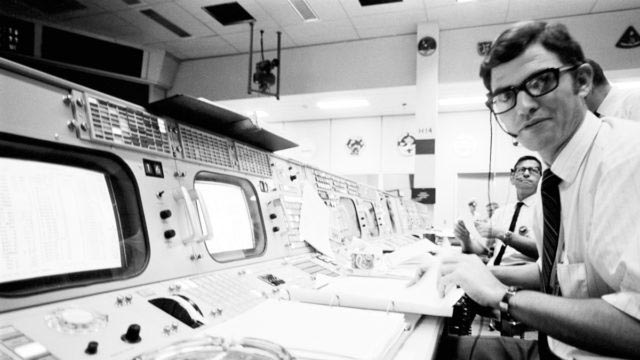
At NASA’s Houston Mission Control Center, EECOM flight controller and engineer John Aaron had a solution. He commanded, “Flight, try SCE to AUX,” instructing the astronauts to switch the SCE (Signal Conditioning Equipment) to auxiliary power. Astronaut Alan Bean remembered the switch’s location from a training session twelve months earlier. He flipped the switch, and immediately, the data display restored itself. They were going to the Moon!
Now here’s the thing. John Aaron just happened to have been present, at the same training session, as Alan Bean. While John was in the simulation room, something caused a nonsensical data display on the control monitor. He went on to independently trace the issue to the SCE and recognized that switching to auxiliary power could restore its function. During those tense moments after lift-off, without data, the astronauts had no idea what had gone wrong or if their rocket was on course. Aaron reasoned that switching the SCE to auxiliary power might restore their data. He was right, allowing them to assess the situation and decide to continue into orbit.

It was a good thing that John Aaron was scheduled to work that first shift. When the instrumentation data became garbled, he was the only one with a strong idea of what to do!
Now, let’s connect this story to your child. Consider sharing it with them and recognizing the moments when they have been present and engaged—whether by being mindful, observing their surroundings, being curious, taking initiative, or demonstrating responsibility. These qualities reflect the actions of both Aaron and Bean.
Photo credits: NASA
PS So what did happen to the Saturn V rocket after lift-off? Turns out they were struck by lightning, not once but twice! Today, lightning towers protect rockets launched from areas prone to lightning, like those found at Cape Canaveral, Florida. NASA is also more picky about the atmospheric conditions for launch.